Package jmri
Interface InstanceManagerAutoInitialize
- All Known Implementing Classes:
AutomationManager,CarManager,CarManagerXml,DivisionManager,EngineManager,EngineManagerXml,JmriUserPreferencesManager,LocationManager,LocationManagerXml,NceConsistRoster,OperationsManager,OperationsSetupXml,RouteManager,RouteManagerXml,ScheduleManager,ServerFrame,SignalSpeedMap,TrainManager,TrainManagerXml,TrainScheduleManager
public interface InstanceManagerAutoInitialize
Provide a hint to the
InstanceManager that this object needs
have additional initialization performed after the InstanceManager initially
creates it. This allows two classes that have circular dependencies on
being able to get the default instance of each other to be managed
successfully.
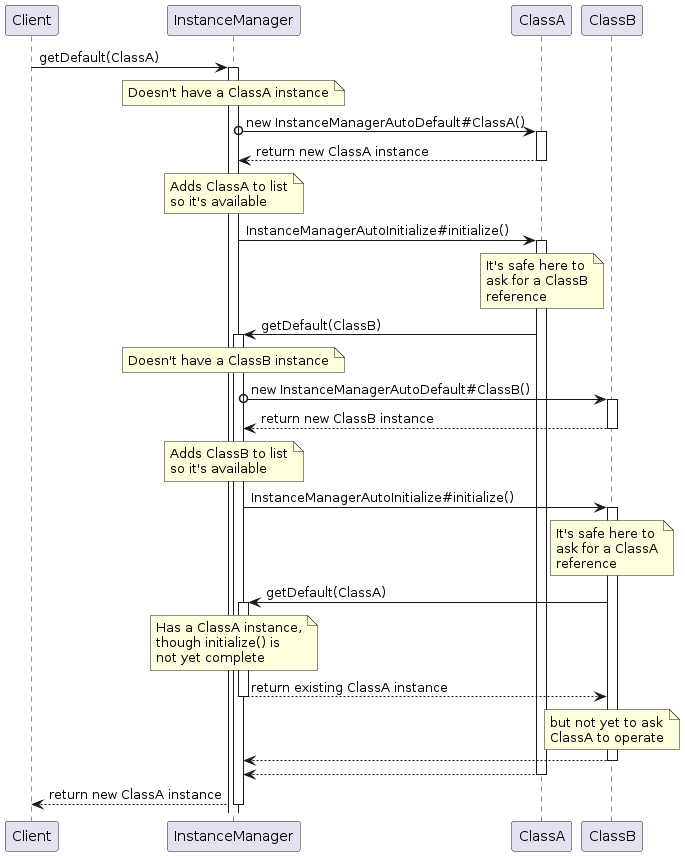
More specifically, the constructors or code called by the constructors
of classes implementing the InstanceManagerAutoDefault interface
(i.e. that have the InstanceManager automatically
create their objects) should never ask the InstanceManager for reference to other
automatically-created types. They may ask the InstanceManager for references in their
initialize() method, but they can only store those; they can't assume
that the objects referred to have completed their initialization and are operational.
See the diagram below for why.
Note: the need to have a class implement this probably is indicative of other design issues in the implementing class and its dependencies.
-
Method Summary
Modifier and TypeMethodDescriptionvoidPerform any initialization that occurs after this object has been constructed and made available by the InstanceManager.
-
Method Details
-
initialize
void initialize()Perform any initialization that occurs after this object has been constructed and made available by the InstanceManager.
-